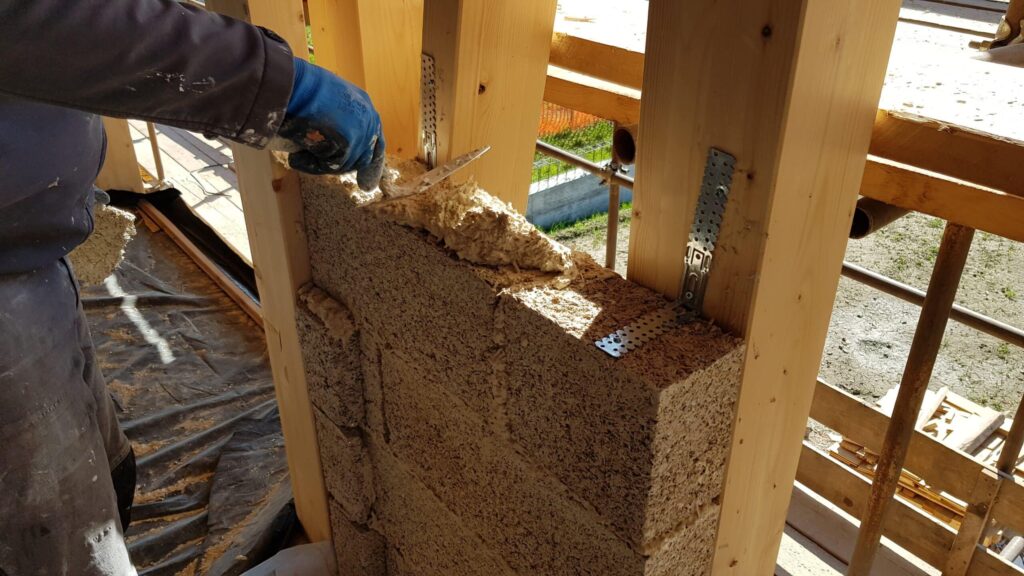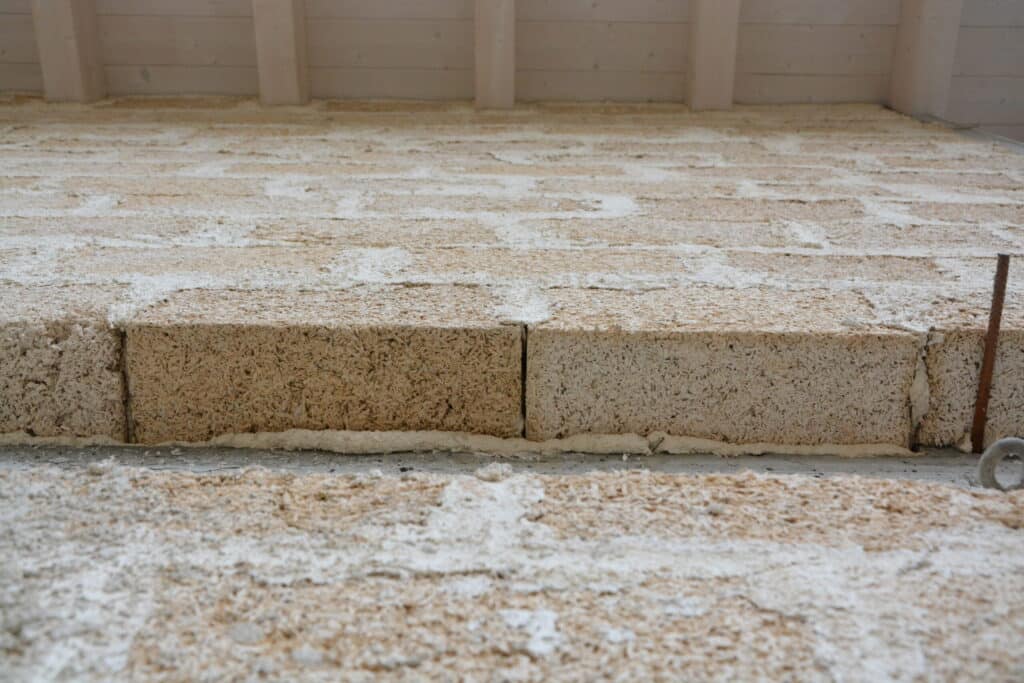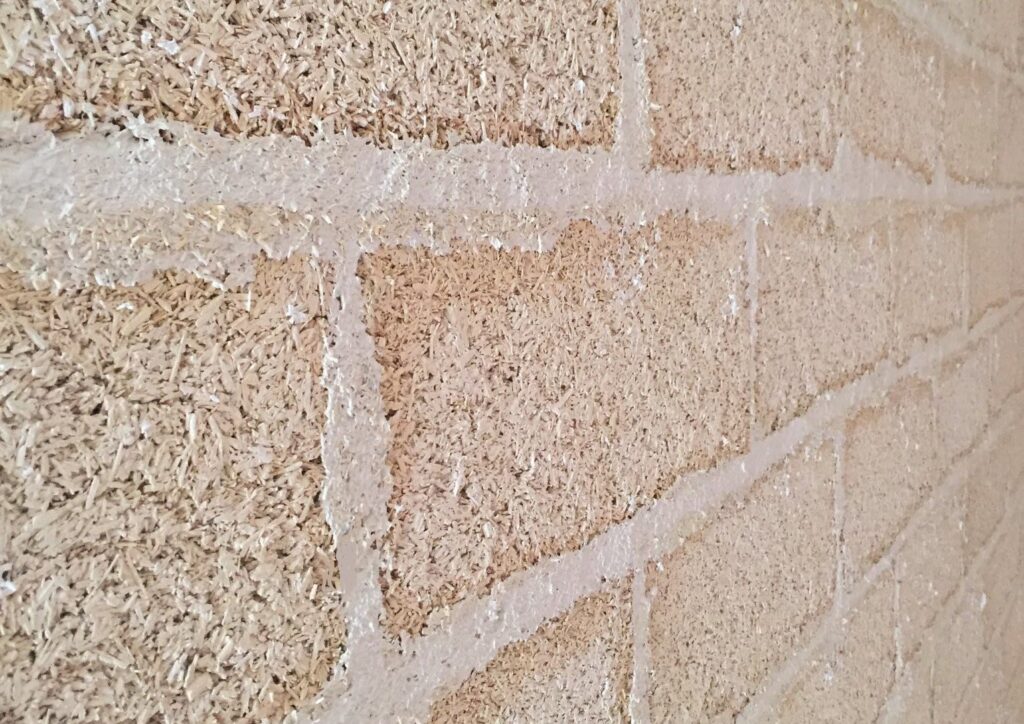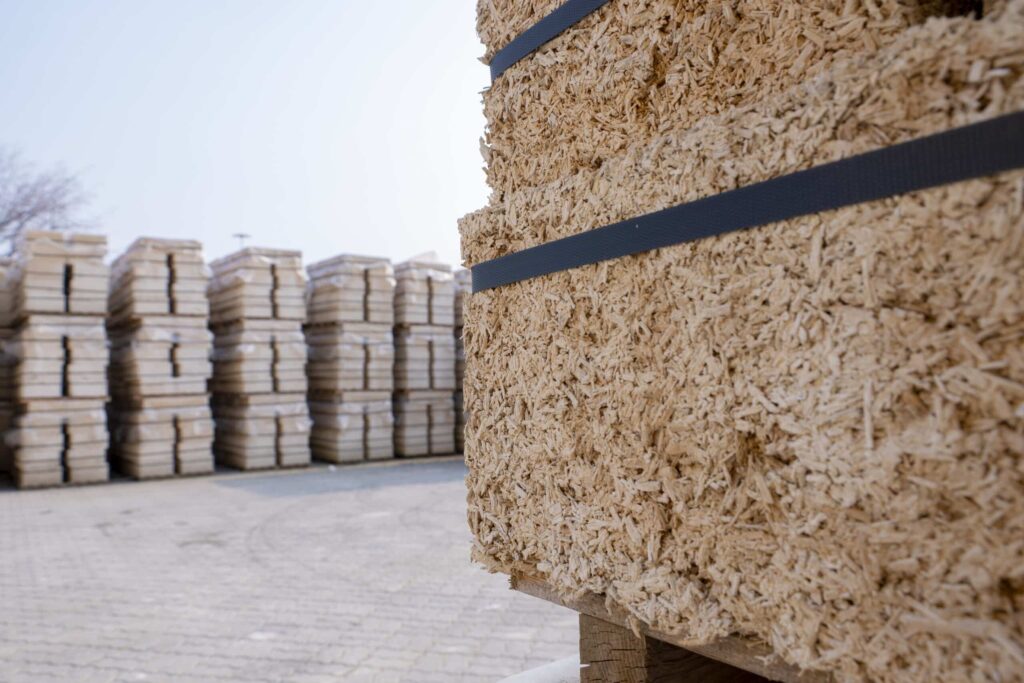






The thermal phase shift of the Biomattone tells you how many hours heat takes to pass through the wall. It depends on the format: it ranges from 3h00′ for the BA8 to 32h04′ for the BA50, without plaster. It increases with thickness, from 8 to 50 cm.
At a glance
- Definition: the time, in hours, that heat takes to pass through the wall.
- Values: from 3h00′ (BA8) to 32h04′ (BA50), without plaster.
- Format: more thickness means more phase shift.
- Plaster: the BA36 goes from 22h23′ to 23h38′ with plaster (LUG26 brochure).
- Source: Biomattone® technical data sheet NOV25.
Updated October 5, 2026. Data source: Biomattone® NOV25 technical data sheet; the example with plaster comes from the LUG26 brochure.
In this article
- What thermal phase shift is
- Biomattone thermal phase shift by format
- Why thickness changes the phase shift
- Phase shift with and without plaster
- How to read the phase shift in a project
- Thermal phase shift in Brescia and Bolzano
- FAQ about thermal phase shift
What thermal phase shift is
Phase shift (time lag) is the delay between the peak outdoor temperature and the peak indoor temperature. In practice, it indicates in hours how long heat takes to pass through the wall. The higher the value, the later the heat reaches the interior.
It depends on the mass, thickness and conductivity of the materials. The Biomattone, for example, has a dry density of 310 kg/m³, a specific heat capacity of 1280 J/kgK and a conductivity of 0.044 W/mK.
Biomattone thermal phase shift by format
In the technical data sheet you will find the thermal phase shift of the Biomattone for each format, but the values refer to unplastered masonry.
| Format | Thickness (cm) | Phase shift (without plaster) | U (W/m²K) | Rt (m²K/W) |
|---|---|---|---|---|
| BA8 | 8 | 3h00′ | 0.5 | 1.99 |
| BA12 | 12 | 5h44′ | 0.34 | 2.9 |
| BA20 | 20 | 11h19′ | 0.21 | 4.71 |
| BA25 | 25 | 14h46′ | 0.17 | 5.85 |
| BA30 | 30 | 18h14′ | 0.14 | 6.99 |
| BA36 | 36 | 22h23′ | 0.12 | 8.35 |
| BA40 | 40 | 25h08′ | 0.11 | 9.01 |
| BA50 | 50 | 32h04′ | 0.09 | 11.53 |
The BA8 stops at 3h00′, while the BA50 reaches 32h04′: there is a difference of more than 29 hours between the two formats.
Why thickness changes the phase shift
The thermal phase shift of the Biomattone increases with thickness: the thicker the block, the longer heat takes to pass through. For example, the BA30 has 18h14′, the BA36 22h23′, the BA40 25h08′ and the BA50 32h04′.
Thermal transmittance also improves with thickness, from U 0.5 to 0.09 W/m²K. However, phase shift and thermal transmittance are two different figures: the first measures the delay, the second how much heat passes through.
Phase shift with and without plaster
The values in the table are without plaster. With plaster, the phase shift increases: for the BA36, for example, the LUG26 brochure reports 23h38′, compared with 22h23′ in the data sheet.
That is why the figure should always be read together with the wall build-up.
How to read the phase shift in a project
Phase shift alone is not enough: in design, the complete wall build-up is what counts. The right format also depends on the type of work and the climate zone.
- thermal transmittance (U) and thermal resistance (Rt);
- wall orientation and exposure;
- vapor-permeable plaster and finishes;
- climate zone of the construction site.
Thermal phase shift in Brescia and Bolzano
For Bolzano, see the performance in cold climates page, where the BA50 reaches 32h04′. For Brescia, there is the formats, prices and technical data page.
The product basics are covered in the guide on what the Biomattone is.
FAQ about thermal phase shift
It is the time heat takes to pass through the wall, measured in hours. The higher it is, the later the heat reaches the interior.
It depends on the format: it ranges from 3h00′ for the BA8 to 32h04′ for the BA50, without plaster. It increases with thickness.
The BA50, with 32h04′. It is also the format with the lowest thermal transmittance, U 0.09 W/m²K.
Yes, with plaster the value increases. For the BA36, the LUG26 brochure states 23h38′, compared with 22h23′ without plaster.
No. Thermal transmittance measures how much heat passes through; phase shift measures how long it takes to arrive. That is why they should be read together.
It depends on the project, the climate zone and your goals. It is best to assess the complete wall build-up with the designer.